
Bordeaux Primeurs 2017
The key word summarizing the climatic journey of Bordeaux 2017 is: earliness. Earliness of the budding first, due to a succession of unique meteorological conditions: a cold winter, but especially particularly dry, with very rare precipitation... (about 150 mm between October 1st and January 31st), then at the beginning of February, a few rainfalls weakly replenished the ground's water reserves (150 mm deficit compared to normal) and finally, a significant temperature rise from mid-March to the end of April, in stark contrast to the winter temperatures. This led to a rapid growth of vegetation as early as mid-April.
Bordeaux 2017
The earliness of flowering next: the temperature allowed the spring buds to form, but the sudden, freezing cold (down to -6°C in some areas) that hit Bordeaux on the nights of April 27 and 28 froze some vineyards and prevented certain estates from harvesting the 2017 vintage (a climatic disaster not seen since 1991). This cold continued until early May, then summer temperatures set in suddenly and intensely, causing the first Merlot blooms as early as May 10. These turned out to be not only rapid but also homogeneous (as in 2005), since the intense heat lasted until late June, when a rainy episode replenished water reserves and further swelled the grapes. These summer conditions, lasting almost two months, allowed for an ideal flowering, with thicker skins and rich phenolic content.Discover the full range of Bordeaux 2017!
Earliness of veraison: the summer was cool and very dry in Bordeaux, slowing down a too-rapid maturation, preserving acids, and delaying the fragility of the skins. The first signs of veraison were still noticeable by July 10 and continued very homogeneously. The temperature differences between day and night during the second half of August enabled excellent synthesis of anthocyanins and aroma precursors.
Finally, the earliness of the harvest: With the late summer rains arriving at the beginning of September, some harvests started, particularly with Merlot. They continued with Cabernet Franc and ended with Cabernet Sauvignon. These rains favored the development of the skins and harmonized the maturity of aromas. Additionally, they avoided potential health risks. The result of the Bordeaux 2017 futures is surprisingly balanced.
The nighttime frost on April 27 and 28, 2017, hit the Bordeaux vineyards unevenly, with the right bank and its Merlot vines being more severely affected. Properties near the Gironde estuary were saved by the thermal protection offered by the estuary… where the Garonne and Dordogne meet, a thermal shield prevented the frost from damaging the first buds of the left-bank estates.
In the detail of the 2017 vintage, in the Pessac-Léognan zone, some estates had a part of their vineyards frozen, resulting in a reduced or nonexistent vintage. The red wines that could be produced have a crisp fruitiness, while the white wines from this region are floral, with notes of white-fleshed fruits.
In the Médoc, also affected by frost, the areas of Listrac and Moulis were impacted, although properties like Château Poujeaux managed to produce a 2017 vintage.
The wines from the Margaux appellation produced 25% less than last year. Nevertheless, they show elegance, round and silky tannins, and a successful balance between fruit and acidity. At Pauillac, the wines generally possess aromas of ripe and crunchy fruit. In properties located on the right bank that managed to escape the frost, the Merlots are well-balanced, fresh, and in line with current gustatory trends. These grapes produce concentrated red fruit juices, with acidity supporting the aromatic freshness.
Saint-Julien offers some fine successes, with certain wines being particularly seductive, with a fresh palate and structure.
At Saint-Estèphe, where the en primeur wines are often closed at the start, some wines surprisingly have a good length and crunchy black fruit aromas, including Calon-Ségur and Phélan-Ségur. Regarding Sauternes, botrytis was avoided at the beginning of September but finally appeared thanks to late-month rains. The 2017 sweet wines offer aromas of white peach and exotic fruits, with citrus notes in the finish.
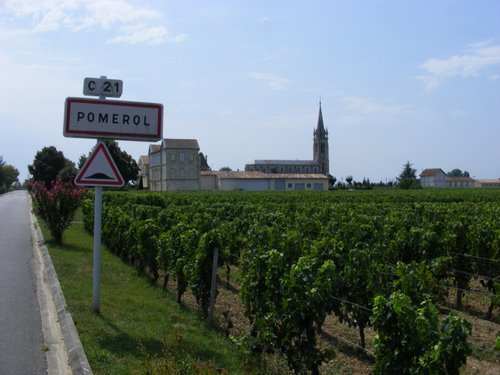
On the right bank, in Pomerol, there is a real divide between estates: while properties like Vieux Château Certan or La Conseillante suffered little from frost, other estates, sometimes located just a few meters away, lost part of their harvest.
In <a href="https://www.daniel-vins.ch/en/our-wines/france/bordeaux/appellation-st-emilion.html" style="color: #7a1d29; font-weight: bold;" title="st emilion"


