
Description of the appellation
The Pomerol appellation is perhaps the smallest famous appellation in Bordeaux, as it covers only about 800 hectares of vineyards. These are mainly planted with Merlot, the dominant grape variety on the right bank of the Dordogne. Pomerol is also the only Bordeaux appellation that has not, strictly speaking, undergone an official hierarchical classification. Pomerol wines are smooth, opulent, and fleshy. Due to their high proportion of Merlot, they can be quite approachable when young but also age admirably well.
History
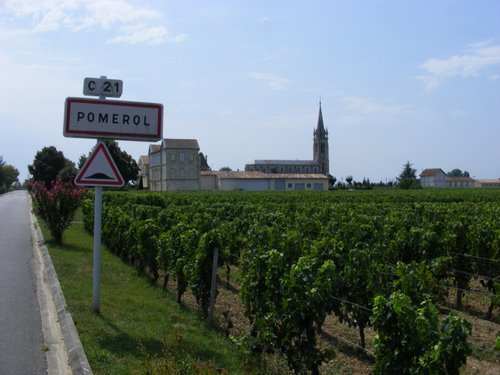 Unlike the grand estates of the Médoc, Pomerol does not really have Châteaux in the architectural sense, except for a few manors such as Château de Sales or Château Beauregard. Most of the estates are small buildings, numbering around 150.
Since Roman times, vines have been cultivated sporadically in the Pomerol region, whose name originates from the Latin word Pomum, meaning fruit with seeds, i.e., grapes. During the devastating Hundred Years' War, wine production was abandoned, and it wasn’t until the 15th century that it resumed. Subsequently, Pomerol was considered a secondary appellation compared to the more prestigious St-Emilion. Starting in the 19th century, the wines of Pomerol gained recognition, especially in the northern European markets, including Belgium, where they were particularly popular.
The various Châteaux of Pomerol
One of the wines that secured the reputation of the entire Pomerol appellation is undoubtedly Petrus (not to be confused with Pétrus or Château Petrus). It is currently one of the most sought-after wines, and its purchase price is among the highest in Pomerol, if not all of Bordeaux. That is, assuming the connoisseur can even find it, as it is very difficult to acquire.
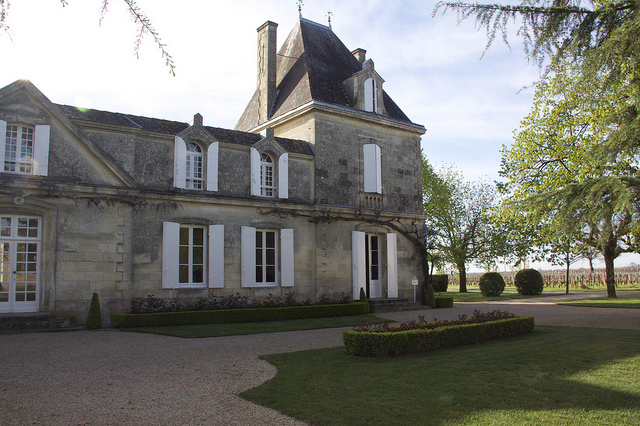 Although Pomerol has an exclusive image of rare and expensive wines, the discerning enthusiast can still find good value for money within this appellation. Among these is Château Beauregard, a modern and pleasant wine, always offered at a fair price. La Petite Eglise, once the second wine of Château l'Eglise-Clinet, is now a wine in its own right, produced by the magician of Pomerol, Denis Durantou. There is also Château Mazeyres, a biodynamic wine by Alain Moueix.
Among the more prestigious wines, there is Château Gazin, Château la Conseillante, expertly managed by Marielle Cazeaux, Château Clinet, which has become a rising star in Pomerol, and the opulent Château la Croix-St-Georges by the young Jean-Philippe Janoueix. We can also mention the outstanding Vieux Château Certan of the Thienpont family, as well as Château Petit-Village, which is undergoing a revival.


